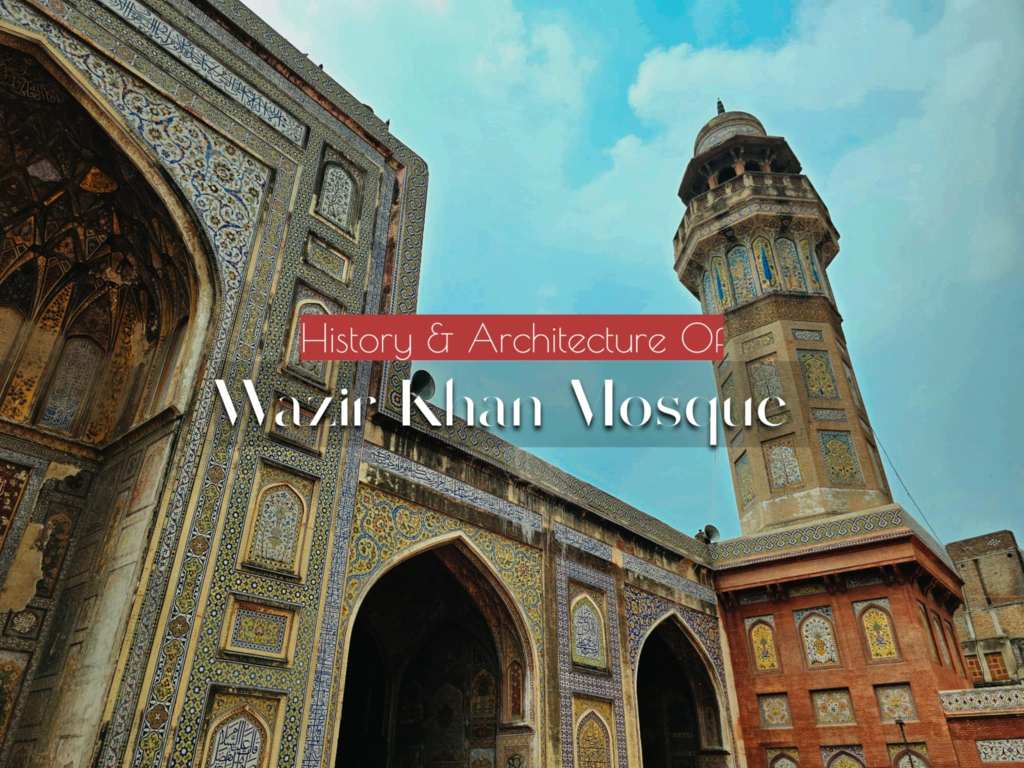
The Wazir Khan Mosque in Lahore is one of Pakistan’s most famous and architecturally significant mosques. It was built during the Mughal era and is renowned for its exquisite tile work and captivating fresco paintings. Here is a brief history of this mosque:
Construction and Patronage
The construction of Wazir Khan Mosque was commissioned by Hakim Ilm-ud-din Ansari, known as Wazir Khan, who was the governor of Lahore during the reign of Mughal Emperor Shah Jahan. Wazir Khan, originally a physician, became an important figure in Shah Jahan’s court and was one of the emperor’s trusted officials.
The mosque was built between 1634 and 1641. It was part of a larger complex that included a bazaar, hammam (bathhouse), and residential areas. The mosque was constructed at a spiritual site where the tomb of the Sufi saint Syed Muhammad Ishaq was located.
Architectural Features
Wazir Khan Mosque is considered a masterpiece of Mughal architecture, distinguished by its intricate decoration. It features stunning tile work, fresco paintings, and calligraphy throughout. Some of the mosque’s key features include:
- Main Prayer Hall: The walls and ceilings of the central hall are adorned with beautiful frescoes depicting floral patterns, Quranic verses in calligraphy, and geometric designs.
- Tile Work: The mosque’s exterior walls are decorated with vibrant tiles in shades of blue, orange, yellow, and green. These tiles are arranged in complex geometric and floral patterns, representing the artistry of the Mughal era.
- Four Minarets: The mosque has four 100-foot-tall minarets at each corner, adding to its beauty and balance.
- Entrance Gate: The main entrance to the mosque is known as the Shahi Hammam Gate, which was an important part of the old city of Lahore. This gate is also embellished with fresco paintings.
- Bazaar and Caravanserai: Adjacent to the mosque was a bustling marketplace known as Wazir Khan Bazaar. Shops lined both sides, and the revenue from these helped support the mosque.
Cultural and Religious Importance
Wazir Khan Mosque has long been a center of religious, cultural, and social activities in Lahore. It has served as a place of worship and a hub of intellectual and spiritual pursuits, with Quranic schools and gatherings of scholars being held there.
Modern-Day Significance
In modern times, Wazir Khan Mosque is considered one of Lahore’s most important historical buildings. It has undergone several restoration efforts to preserve its original beauty. The mosque continues to be a popular tourist attraction and remains a center for worship and social events.
The mosque’s beautiful tile work, fresco paintings, and Mughal architecture are still seen as symbols of Lahore’s cultural and artistic heritage. Located in the old walled city of Lahore, the mosque is also part of the UNESCO World Heritage List, highlighting its historical and cultural significance.
http://instagram.com/travelstoriesmk
 Mohsin Khawar
Leave a comment